
Bridging Andean wisdom and British Flora: the path of co-founder Kim McFadden
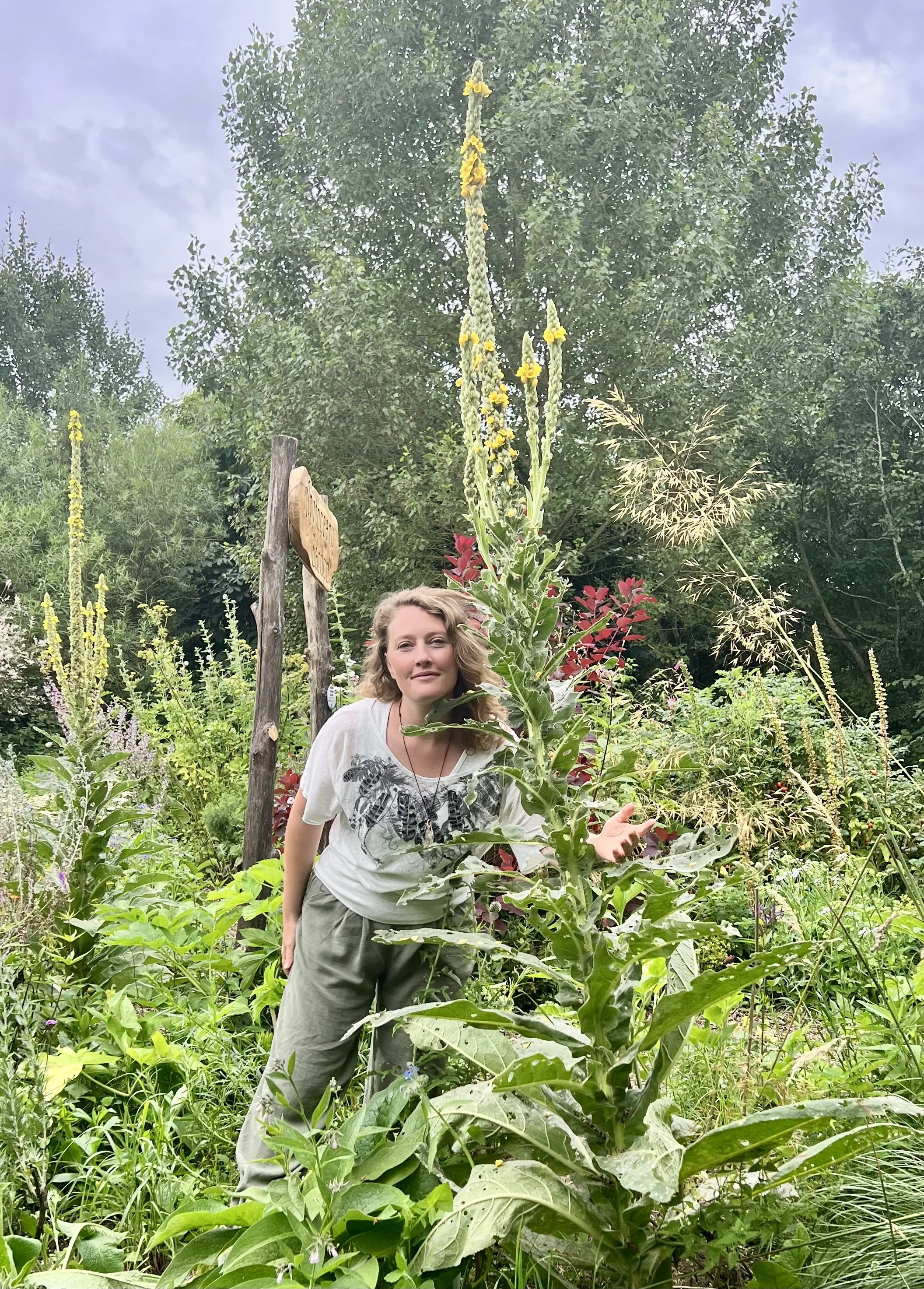
You've spent over a decade learning and apprenticing within the Q'ero tradition and Andean cosmovision. How has that way of seeing and relating to the world shaped the way you work with the native plants and trees of the British Isles?
The Andean culture and Q’ero lineages I’ve had the privilege to learn from have shown me that true healing comes through being in relationship with life. By cultivating living connections with all the beings of this Earth, we come home to our hearts, with love and reciprocity for this gift of living. So I find it hard to talk about one specific aspect of the Q'ero lineages that influence the way I work, because the core teachings have permeated and shaped how I choose to interact with every being.
On my journey of connection with the lineage, I fell in love with plants; their beauty, generosity, peace, healing, and wisdom. When I was in Peru, I was journeying through the Sacred Valley with the Paqos, they would support us with plants and herbs from the landscape. They would sing and play instruments to them, make offerings, prepare healing soups, and even, at one point, make a poultice for a sprained ankle.
Later, they came to the UK, to The Clophill Centre, to hold different ceremonies. One of the elders made a Nettle root tea, and before we drank it, he whistled the most amazing ícaro. He then led us to Plantago Major and again whistled a medicine song. I felt the depth of connection, a whole new experience of healing opened with one of our native plants. That really sparked a moment of realisation and inspiration for me. In that moment, I saw the bridge back to communing and healing with the flora of the British Isles, for this I carry a deep gratitude.
You are a mentor for both adults and children in nature connection. What is the most common 'block' you see in modern adults when they try to reconnect with the wild, and how do the plants help them break it?"
The biggest block that I find when working with children and adults (but really mostly adults) is the need to conceptualise, to rationalise, to be in the “I know,” the knowing of everything, .
This can be really difficult when we are learning something for the first time, or having a new experience, and being asked to stay present with what we feel and intuit, rather than moving quickly into knowing, naming, or explaining.
When we're able to approach the plants from a place of curiosity and discovery, instead of trying to understand or know, we begin to discover and experience. From that experience comes a much deeper understanding, and that's what helps us break through.
I do my best to cultivate an environment where there are no wrong answers, and there's no shame in being different or having a different experience. Eventually, all of the threads of experience with a plant come together and weave a picture, or reveal the essence of the plant and the information that's emerging that day.
At the same time, everyone has their own individual experience of how that plant is working with them personally, people are genuinely surprised to see that so many others in the group either had similar experiences or had very different experiences that led them to a similar understanding, for most this is a big breakthrough or dawning moment, that the field is alive with interrelational information, all is needed is active participation in communication.
Your Hedgerow Medicine course emphasises "coming into communion" with plants through the senses. How do you help students move past their logical brain to trust their intuitive plant communication?
Sound needs no logic, smell can take you straight into the somatic memory, if you think about a smell you love, memories spontaneously emerge. We respond instinctively to all our senses, this is the key.
Over the years I have created a sensory journey, a guide through the sensory realm, the mythic and spirit, to be able to bypass our logic and explore with curiosity. This way of exploring, along with support, to understand and translate the communication people receive through sensory information.
Sometimes people become quite mystified about how they can have such accurate and profound knowing, they may tell from the taste or the smell how that a plant is going to help them. I love how excited people get when at the end of a discovery session we cross reference books and medical material to find that our senses were right…..It is a magical moment.
A recurring theme in your work is "reawakening ancestral memory." How can working with local, native plants help us reconnect with our own lineage and the "clay of our ancestors?
We are so interwoven with the plant realm; over the course of evolution, the plant kingdom has been the foundation of our human lives. We have worn plants, eaten plants for food, crafted plants medicinally, they create our soils, we live under their roof, plants are our home, our body, the sustenance, gifting us life as a part of this organisim Earth.
The memory of this lives in our bones, our flesh, our being, this is part of the clay of our ancestory. Plant wisdom through sensory communication may seem like a mystic concept that can bring cynicism, but it is actually every humans ancestral inheritance through somatic memory.
Coming into relationship with native flora can awaken the memory within us and help us to experience and trust in the relationship that has been woven through the cycles of our planet and the human experience, gifting us an opportunity to hear the wisdom of our Ancestors and living elders.
Your work emphasises helping people find their 'soul song.' For a student who feels 'muted,' what is the first step you take to help them find their voice through plant communication?
Helping people to find their song is really about helping somebody to come into their unique expression in this life, in this world. And that unique expression is a gift to life, a song to life.
The plants really support this process, because we have so many aspects of ourselves that are aligned and resonate with different plants. Sometimes parts of us can get blocked. Sometimes parts of us can become restricted by experiences in our lives. That, in a way, is almost inevitable, and part of the great initiation of life.
Plants can help us to return to our natural self, help us return to the essence of our being, and help us to find that inner voice of the soul in the great landscape of life.
The more time spent listening, studying and being with the plants, listening to their voice and their essence, then in return, in understanding and cultivating that listening ear, that you can listen more deeply to the voice of your own being.In that, I find the plants can then support us to really express that voice in the world, to share the full gift of who we are, and to bring our song to life. The song of our own essence, the song of our soul, the song of our being and for that to be received as a gift to life.
So for me, plants help to weave those connections to deep listening, and help to cultivate being able to see the gift within the plant, being able to understand and hear the gift within our living relations, and in turn, being able to hear our own gift and to be able to share that unique and sacred expression.
You teach adults and children. What is the most important piece of wisdom you hope the next generation takes away from their time in the woods and gardens?
That Relating and comunincating with the plants is not something reserved for a few special people, It is their inheritance.
And that they are a welcome, unique gift and expression, a valued part of the great web of life.
Learn more about Kim McFadden.