
Apple Myth and Magic
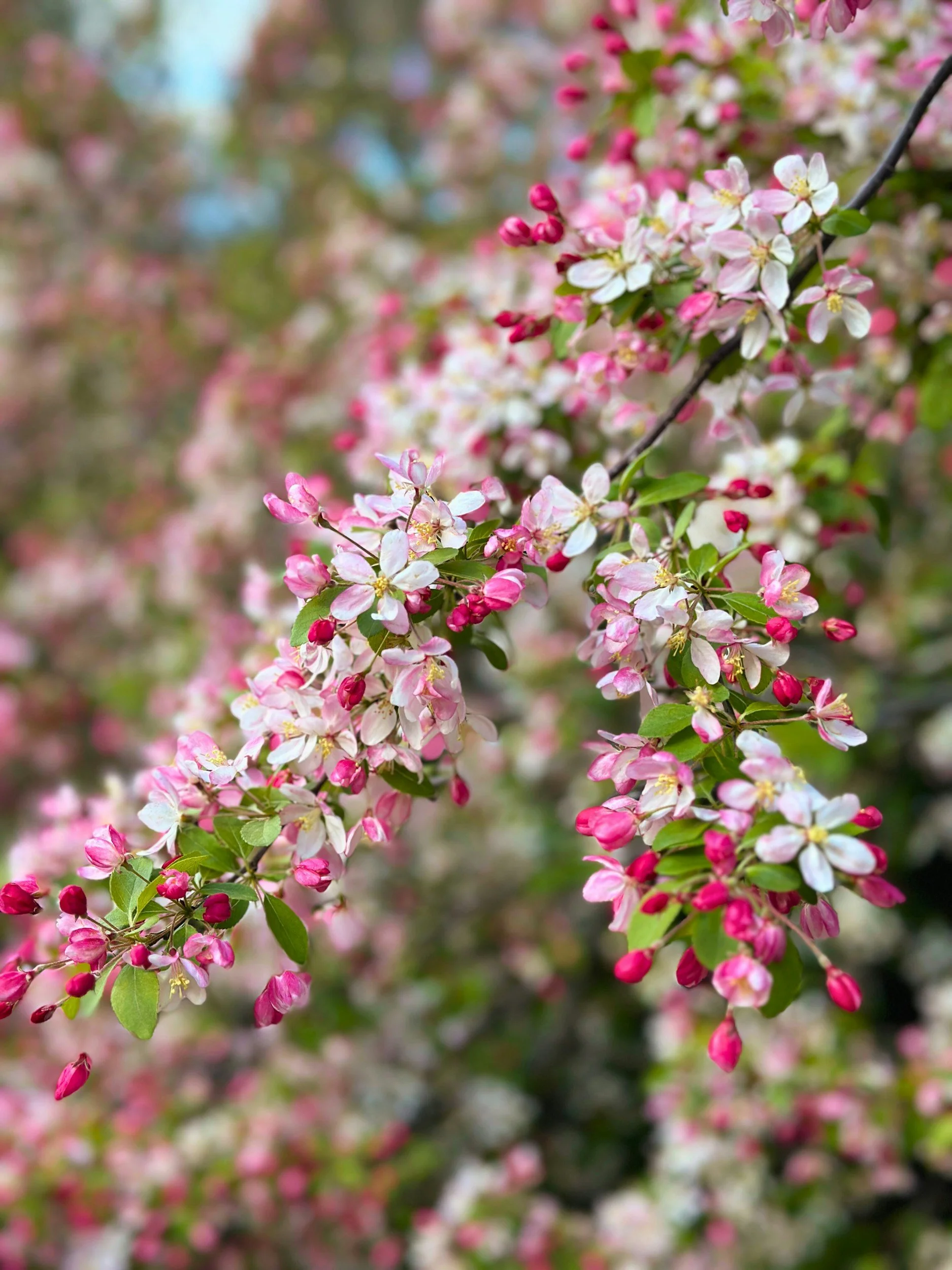
Today, the crab apple is often overlooked as a plant medicine, and yet here in the British Isles it was once deeply revered, woven into the myths and magic of these lands.
In the myths of these isles, the apple and the apple blossom have long been an invitation into the Otherworld, into healing, enchantment, beauty, and connection to something eternal.
The Apple Tree’s symbolism is not only found here in the British Isles. Across cultures, across mythology, religion, and folklore, there is a repeating pattern surrounding the apple. Again and again, throughout human history, the apple appears carrying a profound spiritual weight.
There seem to be two currents moving through the stories.
One is the shadow side of the apple. The apple as temptation, deception, exile, vanity, or false enchantment.
In the story of Adam and Eve, the forbidden fruit becomes connected to temptation, knowledge, and separation from paradise. In Greek mythology, the golden apple thrown by Eris, the goddess of discord, sparks jealousy, rivalry, and eventually war. In Snow White, the poisoned apple becomes an instrument of envy and illusion, beauty corrupted into harm.
When the apple appears within this shadow story, it often reflects imbalance within. The misuse of power. Vanity. Control. Seduction. Jealousy. Enchantment used to deceive rather than heal.
Far more often though, throughout the old myths and sacred stories, the apple appears as something healing, life-giving, and deeply connected to the divine.
The apple as healing.
The apple as immortality.
The apple as sacred nourishment.
In Norse mythology, the goddess Idunn guards the golden apples that preserve the youth and vitality of the gods themselves. In Greek mythology, the golden apples of the Hesperides grow within a sacred garden at the edge of the world, granting divine life and immortality.
In the Celtic traditions of these isles, the apple orchard becomes a symbol of paradise and eternal life.
Irish myth tells us of the Craobh Airgid, the Silver Bough or Silver Branch, a sacred silver branch from an apple tree bearing blossoms and magical apples. Sometimes the apples ring like bells, creating enchanting music said to soothe grief, cure suffering, and calm the soul.
The Silver Bough appears most famously in the ancient Irish tale The Voyage of Bran.
Bran falls asleep outside his hall, lulled by mysterious music that only he can hear. When he wakes, he discovers a beautiful silver branch covered in white apple blossoms. A woman from the Otherworld appears before him and sings of a paradise realm beyond the sea, a place without sorrow, suffering, or death.
The branch awakens something ancient within him.
A longing.
A calling toward the eternal.
The Silver Bough becomes more than a branch. It becomes a bridge between worlds. A doorway into the Otherworld.
Throughout Celtic mythology, the apple tree appears in sacred islands, takes us to timeless realms, and places beyond ordinary reality.
There is Emain Ablach, the Isle of Apple Trees, associated with the sea god Manannán mac Lir, guardian of the Otherworld and keeper of hidden realms. The apples there never diminish, never decay, and are said to sustain eternal youth and abundance.
And there is Avalon, the legendary Isle of Apples from Arthurian tradition, a healing realm beyond time itself where King Arthur is carried after his final battle.
The orchard itself becomes almost like a threshold space, somewhere between the earthly and the divine.
In another Irish tale, Echtra Cormaic, King Cormac receives a silver branch bearing nine red-gold apples. The music of the branch heals sorrow and eases suffering. So enchanted is Cormac by its beauty that he gives up everything to possess it, only later discovering that the branch ultimately leads him toward wisdom, reunion, and spiritual understanding in the realm of Manannán mac Lir.
In the story of Conle, a woman of the Sidhe offers him a magical apple that feeds him for a month without ever diminishing. Yet with every bite he becomes more deeply drawn toward the Land of Women and the Otherworld itself.
The apple in these stories is never merely fruit.
It is sacred nourishment.
A symbol of initiation.
Perhaps this is why the apple carries such spiritual weight across so many traditions. The fruit itself is not portrayed as inherently harmful or benevolent, but is a powerful key and access to the mystery and eternal source of life.
In stories where the apple is used to manipulate, deceive, or control, suffering follows. But where the apple is approached with reverence, humility, or openness, it becomes a symbol of healing, wisdom, paradise, and connection to the eternal.
Even today, in our modern myths, the symbol still lives with us. The apple appears on the backs of our phones and computers, once again offering connection to another world. It continues to represent knowledge, possibility, and creativity, but also temptation, distraction, deception, and forms of enchantment that can pull us away from ourselves.
The apple has always remained close to the human story.
Within the Celtic myths, fairy tales, and legends, certain themes continue to quietly return.
The apple as a bridge between worlds.
The apple as sacred nourishment.
The apple as a symbol of paradise, healing, renewal, and eternal life.
Initiation.
Remembrance.
Enchantment.
Abundance.
The soul’s journey toward wholeness.
The apple does not simply represent knowledge.
It represents relationship with the Otherworld itself.
Written by Kim McFadden
# References and Further Reading
The Voyage of Bran
Ancient Irish texts and references on the Silver Bough and Celtic mythology
Manannán mac Lir and Emain Ablach references
