
Crafting Sacred & Sustainable Smudge Sticks from UK Native Plants
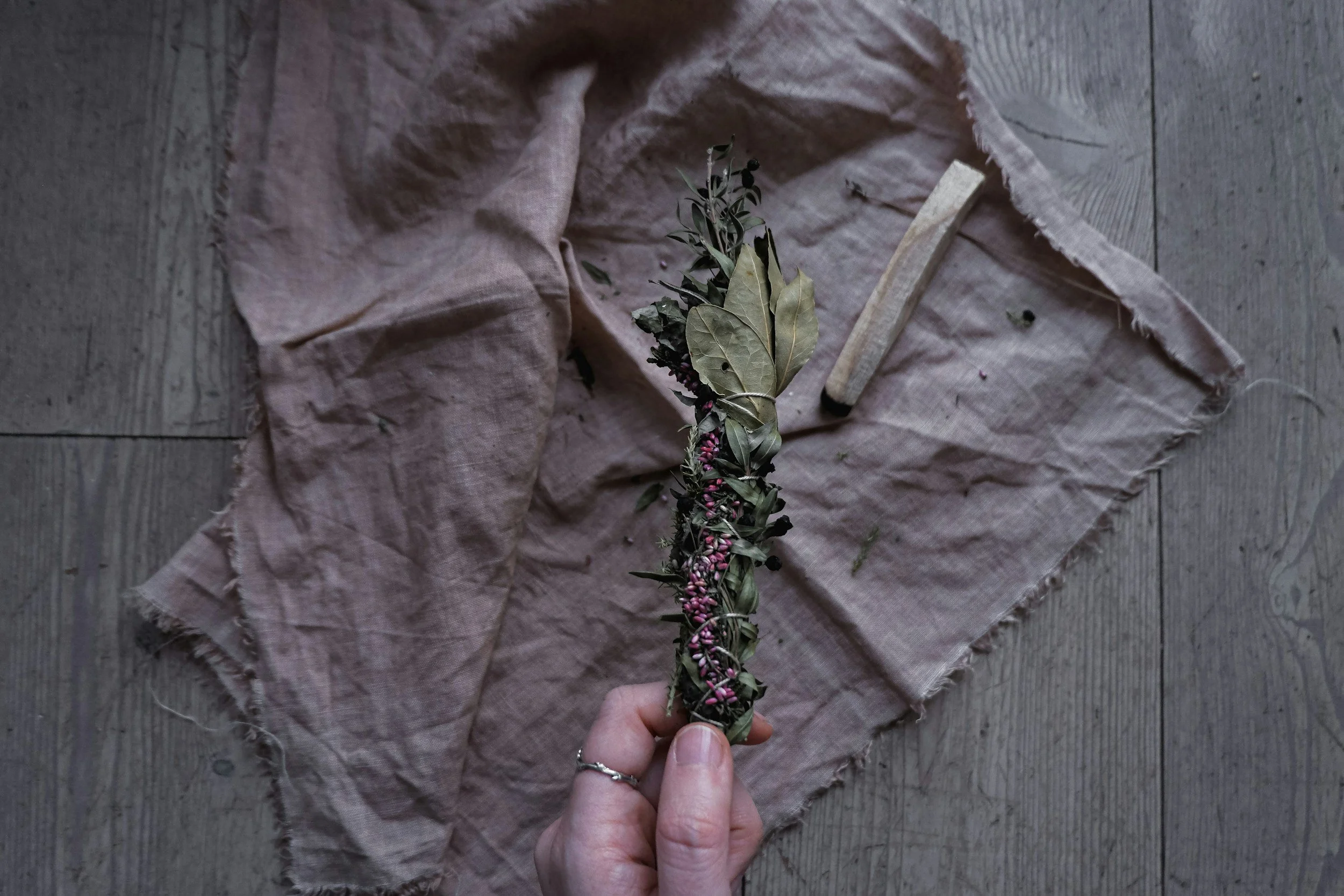
When we think about cleansing a space, it is easy to default to the modern, store-bought bundle of white sage. White sage (Salvia apiana) is a sacred herb of North American First Nation tribes that is traditionally used for smudging. Popularisation of shamanic practices and earth-based spirituality has created a market for mass commercialisation of smudge sticks and white sage. This has placed a heavy strain on both wild plant populations of white sage and access for the traditional communities who steward this sacred plant. Commercial demand has led to widespread illegal poaching and the ecological over-harvesting of wild White Sage in the American Southwest, often leaves traditional gathering grounds stripped bare for local communities. So if you are buying white sage, always remember to check how the White Sage is sourced or you may even want to grow your own White Sage if you use it regularly.
Here in the UK, our own land provides an abundant, deeply resonant tapestry of sacred plants. By gathering local flora, we step away from transactional consumerism and enter into a direct, respectful relationship with the spirits of the plants growing right on our doorstep. Making your own smudge sticks is an act of slow magic, sustainable ethical practice and a way to weave the medicine of the plants more deeply into your life.
A Note On Smudging
In mainstream wellness spaces, the word "smudging" has become a generic catch-all for lighting any bundle of dried herbs to produce sacred smoke to clear energy. However, the term refers specifically to a sacred, structured ceremonial practice belonging to various Indigenous peoples of North America, such as the Lakota, Ojibwe, and Cree nations. For these communities, smudging is a profound, living prayer that involves distinct protocols, and specific ceremonial tools to lift away stagnant energies and to carry prayers to the Creator.
The ritual burning of plants for purification is a practice found in many cultures across the globe, but it takes different shapes and cultural context depending on where our ancestors walked. In Northern Europe and the UK, the historical traditions lie in practices like saining - an ancient Celtic method of using smoke from regional wood and herbs like Juniper, Pine, or Mugwort. When we work with the plants of our own local soil, we respect the closed practices of Indigenous nations, protect fragile ecosystems abroad, and revive a lineage of sacred medicine that genuinely belongs to the land beneath our feet.
Plant Allies
Some plants lend themselves well to be dried and used for incense or smudge, they burn well and release healing properties in their smoke. It is important to note that some plants produce carcinogens when burnt so it is important to understand the plant you are working with. Here is a few of the plants we love to work with as smudges at the School of Shamanic Herbalism:
Mugwort (Artemisia vulgaris): One of our go to herbs for clearing away stagnant energies and bringing in protection. Growing wild across waste grounds, roadsides, river edges, and verges, Mugwort has been used in Britain for millennia as a sacred herb.
Sage (Salvia officinalis): For cleansing and balance. It burns with a rich, familiar aroma that grounds a room instantly.
Rosemary (Salvia rosmarinus): For clarity and centeredness. Rosemary’s high oil content makes it an excellent, steady burner.
Lavender (Lavendula angustifolia): For purification and brightening. Perfect for adding a soft, calming sweetness to the sharper, clearing notes of the woodier herbs.
Crafting Your Bundle
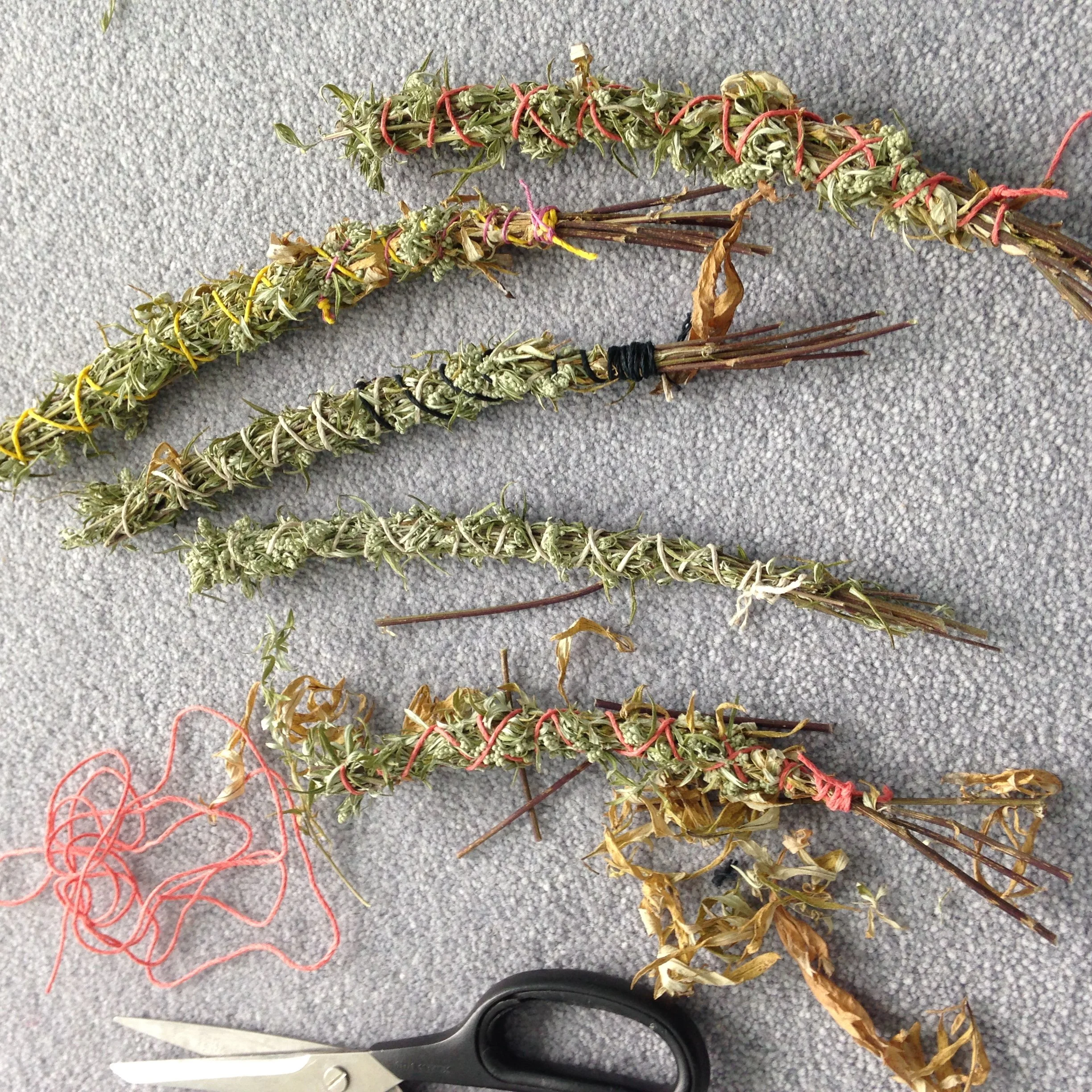
What You Will Need:
Scissors
Thread
Plants to harvest from
Gather your stems:
The process of binding a smudge stick is a meditation in itself, an opportunity to rediscover a sense of sacred belonging. Treat the gathering as an exchange. Ask the plant's permission before you cut, leave an offering of thanks, and take only what you need.
When working with fresh plant material it is best done on a dry morning. Choose fresh, supple branches, making sure the stems are not too thick. Cut your plant material into lengths of roughly 15 to 20 cm. If they are too dry, they will snap during binding. If they are soaking wet from rain, they will rot before they dry out. You can leave them for a few days before following the next steps, to help them dry out. You can also use dried herbs too as long as they are on a stem. I like to use plant material that has had an opportunity to dry out a little.
Align and layer:
Strip the leaves off the bottom one or two inches of each stem to create a little ‘handle'‘. Create the core of the smudge stick by laying your stems together. Place the woodier or thicker stems at the center to act as a spine, and wrap the stems leaves around them. Align all the leafy tops facing the same direction and the stripped parts of the stem at the bottom.
Tie the base:
Use 100% natural twine such as cotton, hemp, or linen thread. Avoid synthetic string because you do not want to breathe in melting plastic. Tie a secure double knot around the stem base just under where the leaves are, leaving a 2-3 inches of a tail.
Criss-cross bind:
Working upwards, wrap the twine tightly up the length of the bundle at a diagonal angle, compressing the foliage firmly as you go. Herbs shrink considerably as they dry, so bind them tighter than you think you need to. However it is important not to over tighten, as the moisture needs to escape, and there needs to be room for air to move through so the smudge stick stays alight.
Return to the base:
Once you reach the top, spiral the thread back down the bundle, creating a criss-cross pattern with your first passes. Tie it off securely to your original tail at the base. Trim or tuck in any wildly stray leaves.
Let them dry:
Hang your finished bundles upside down in a dark, warm, and well-ventilated space. An airing cupboard or a dry shed works beautifully. Leave them for at least two to three weeks. If you try to burn them while the internal moisture remains they will not stay alight when burning.
Time to smudge:
When your bundle is completely bone-dry, it is ready. Light the leafy tip until it catches a flame, gently blow it out to leave a glowing, smoking ember on the end, and make sure to have a heatproof bowl or plate underneath to catch any glowing embers or ash. Let the smoke carry your intentions into the corners of your space. You can put your smudge stick out but stubbing it out on the heatproof plate or bowl, or giving it one second under running water. Keep your smudge stick in a wooden box or even a zip lock bag to keep it from being damaged or leaving ash remnants around.
To learn more about how to work with sacred herbal preparations see our Shamanic Herbalism Apprenticeship.
This article has been written by Suneet Kaur, Shamanic Practitioner & Medical Herbalist.
